Lot's Wife
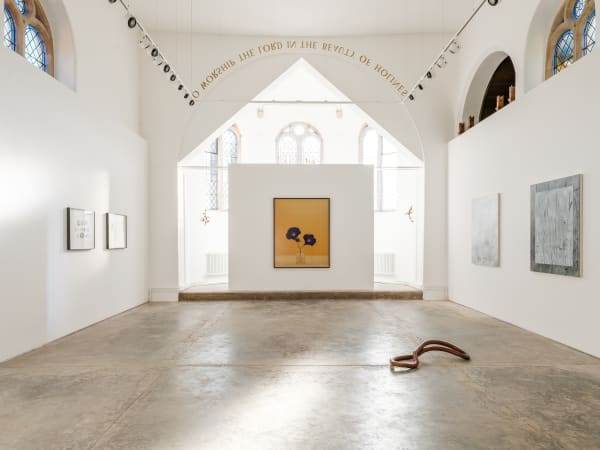
Featuring works by Alicja Biala, Kate Friend, Rachel Howard, Nika Neelova, Cornelia Parker, and Clare Woods, this cautionary tale is reimagined to symbolise the universal experience of reflection.
Suspending time, the works explore the moments in-between—those fleeting spaces where past and future meet. A dialogue emerges between decay and rebirth, memory and material, as each artist memorialises flux and examines what it means to look back. From glass to fabric, dust to flowers, the chosen materials evoke nostalgia, gently rendering the fragility of memory.
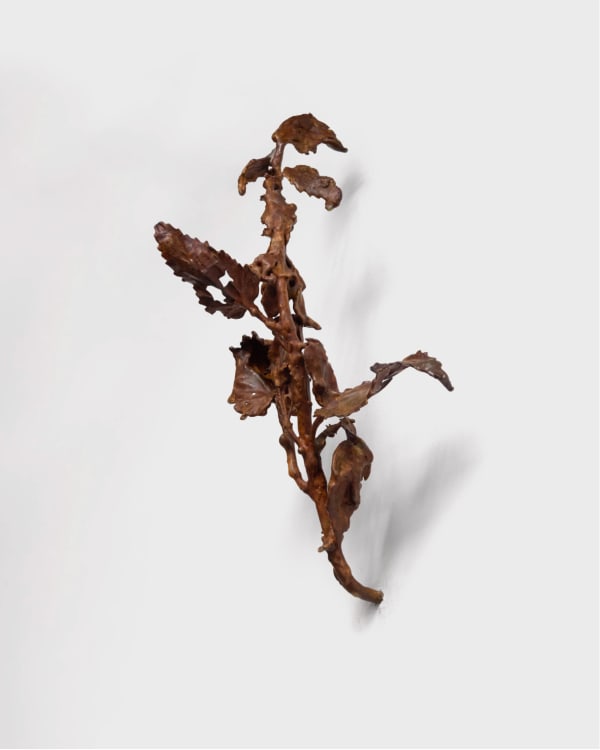
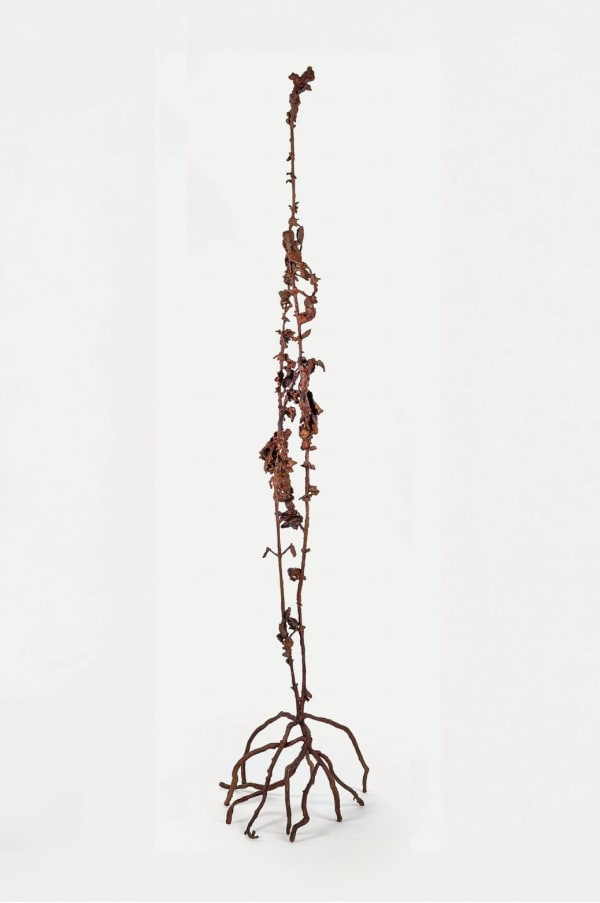
Alicja Biala (b. 1993, Poland) is a multidisciplinary and multimedia artist based between Poland, the Netherlands, and the UK.In her practice, she experiments with scale and material, with works ranging from large-scale murals and sculptures to architectural and lighting installations, and from etchings to paintings. Her work often references pagan motifs, interweaving tradition with the political and personal tensions of everyday life and aiming to cut into our shared cultural past. Biala studied at the Royal Drawing School and the Royal College of Art, and has exhibited internationally including Museum of Contemporary Art, Kraków, Liverpool Biennial, and Wehrmuehle, Berlin.
Kate Friend's (b. 1983) photographs are from her new series There Are Always Flowers For Those Who Want To See Them, a series of botanical works made at Vatican-approved Marian apparition sites (sites of alleged visions of the Virgin Mary). Each work comprises a photograph of a single flower found growing on sacred ground. Over the course of seven months, Friend travelled to four such sites in southern Europe, seeking flowers at each location. Kate’s work has featured in The New Yorker, The World of Interiors, The New York Times and The Financial Times.
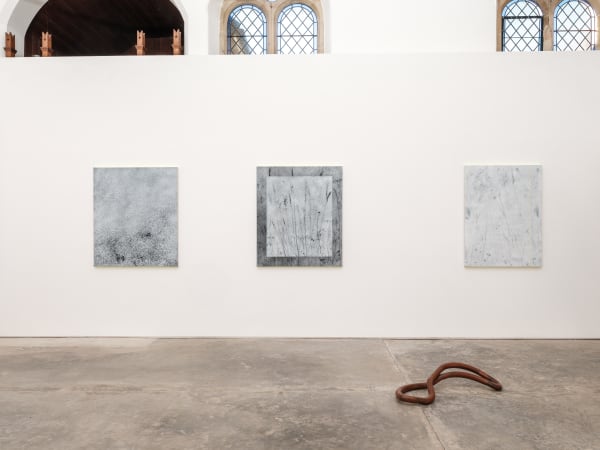
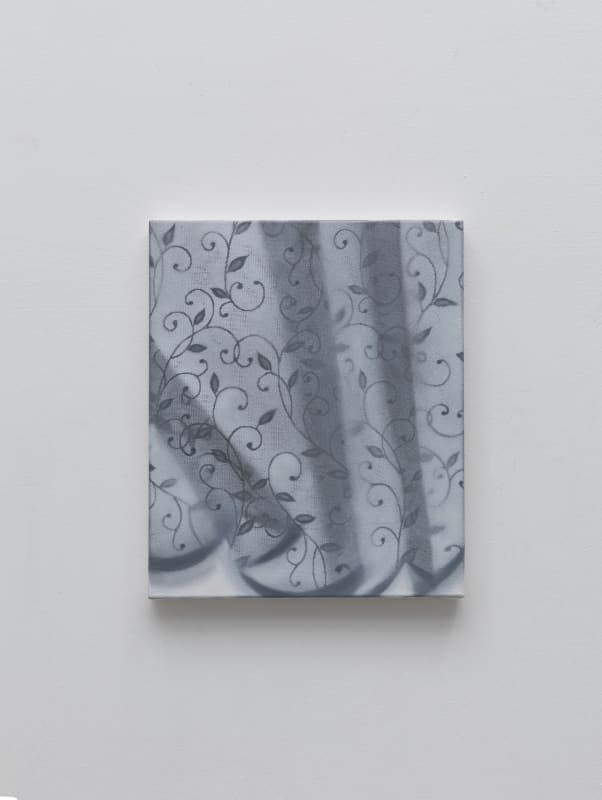
Rachel Howard (b. 1969, County Durham) presents a new series of monochromatic paintings—quiet observations that explore the tension between witnessing and erasure, presence and absence. Known for her psychologically charged and materially layered works, Howard’s practice often confronts themes of violence, loss, and faith. In these new paintings, the act of looking is both intimate and unsettling, evoking the quiet vigilance of surveillance—where seeing becomes a form of exposure as much as understanding.
Her minimalist palette in this body of work draws the viewer into a contemplative space where what is seen is as vital as what remains hidden. A graduate of Goldsmiths and an independent publisher, Howard has exhibited internationally, including solo museum exhibitions at Hastings Contemporary, UK, MADRE, Naples, MACRO Testaccio, Rome, and MASS MoCA, USA.
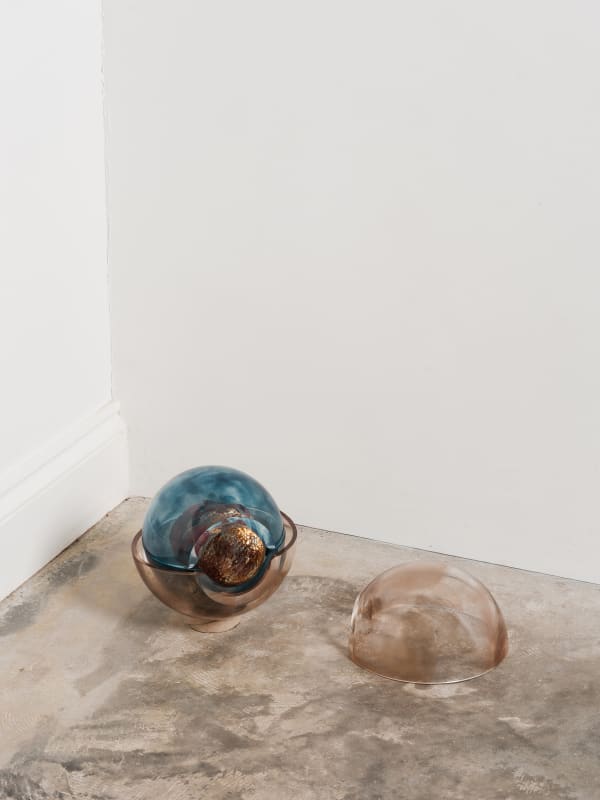
Nika Neelova (b. 1987, Moscow) presents new sculptural works in glass, a material that recurs throughout her practice for its paradoxical qualities—fragile yet enduring, transparent yet transformative. Her work often examines the cyclical nature of history, entropy, and the afterlives of materials. In this context, the glass becomes a fitting medium through which to explore suspended, irreversible moments. A graduate of the Royal College of Art, Neelova has exhibited at institutions including the Saatchi Gallery, Museum der Moderne Salzburg, and Dulwich Picture Gallery.
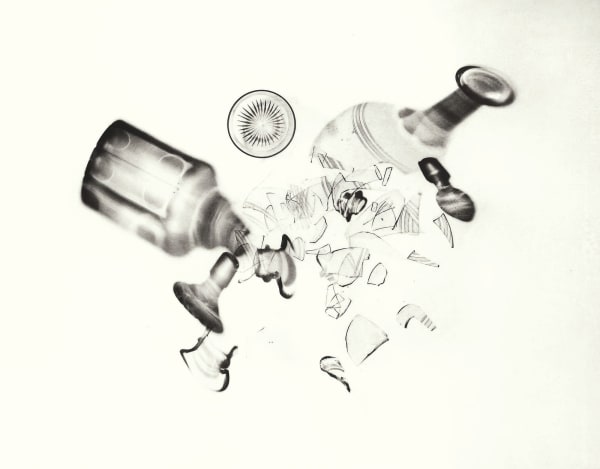
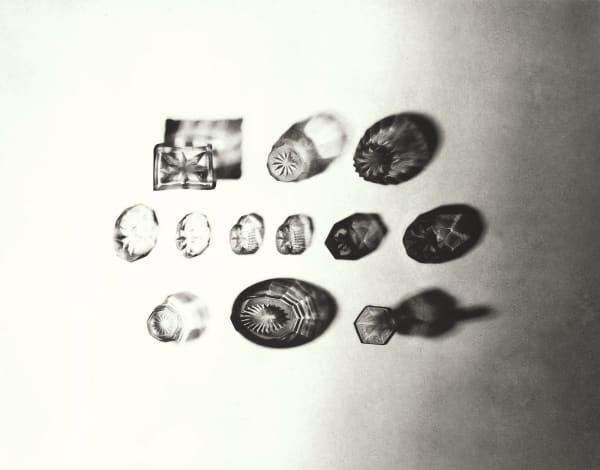
Cornelia Parker (b. 1956, Cheshire) is renowned for her transformative use of everyday materials—turning the ephemeral into the iconic. Her works often exist in a state of suspension, exploring themes of destruction, preservation, and reinvention. In this exhibition, Cornelia presents a selection from her Through the Glass Darkly etchings, a series that reconfigures glassware to create haunting, almost spectral images. Through the process of casting and capturing the shadows of each object, a blurred vision of the past emerges through a fractured lens. Nominated for the Turner Prize in 1997 and appointed OBE in 2010, Parker’s major solo shows include those at Tate Britain and The Metropolitan Museum of Art.
Clare Woods (b. 1972, Southampton), a sculptor by training, is known for her emotionally resonant large-scale paintings that often draw from historical references, personal memory, and the tradition of nature morte. Her work Edith references the lesser-known name associated with Lot’s Wife and lends its name to the exhibition. Painted with her signature fluidity and bold use of colour, the work explores the tension between beauty and decay. Woods studied at Bath College of Art and Goldsmiths and has exhibited widely, including at the CCA Andratx, Spain, Norrtälje Konsthall, Sweden and Pallant House Gallery, UK.
The exhibition reclaims the nameless identity of Lot’s Wife, transforming her into a visual metaphor for reflection and transformation. Here, she is no longer a silent figure of punishment, but a symbol through which we see ourselves—caught between what was and what may come. Flowers—both fleeting and perennial—thread throughout the exhibition as emblems of memory and metamorphosis. Each artwork becomes a mirror, inviting us to confront our own moments of turning back.
-
 Kate Friend, Scabius, Fátima, Portugal, May, 2024
 -
Kate Friend, Morning Glory, Fátima, Portugal, May, 2024
-
Cornelia Parker, Being and Un-being, 2020
-
Cornelia Parker, The Price of Salt, 2020
-
Clare Woods, Edith, 2025
-
Rachel Howard, Reaper (Crosshair), 2024
-
Rachel Howard, Veronica’s Veil, 2021/22
-
Alicja Biala, Hyperaccumulator (3), 2025
-
Alicja Biala, Hyperaccumulator VI, 2025
-
Nika Neelova, Medusa, 2025